Canine Aromatherapy: What Dog Owners Need to Know
Aromatherapy has become increasingly popular among people like you – dog owners or dog carers – looking for natural approaches to supporting their pets’ wellbeing. But when it comes to essential oils and dogs, natural does not automatically mean safe.
Essential oils are highly concentrated plant extracts, and dogs can react differently to them depending on the specific oil, concentration, amount and route of exposure. Veterinary poison-control experts warn that some essential oils can cause serious problems when dogs ingest them or have concentrated oils applied to their skin.
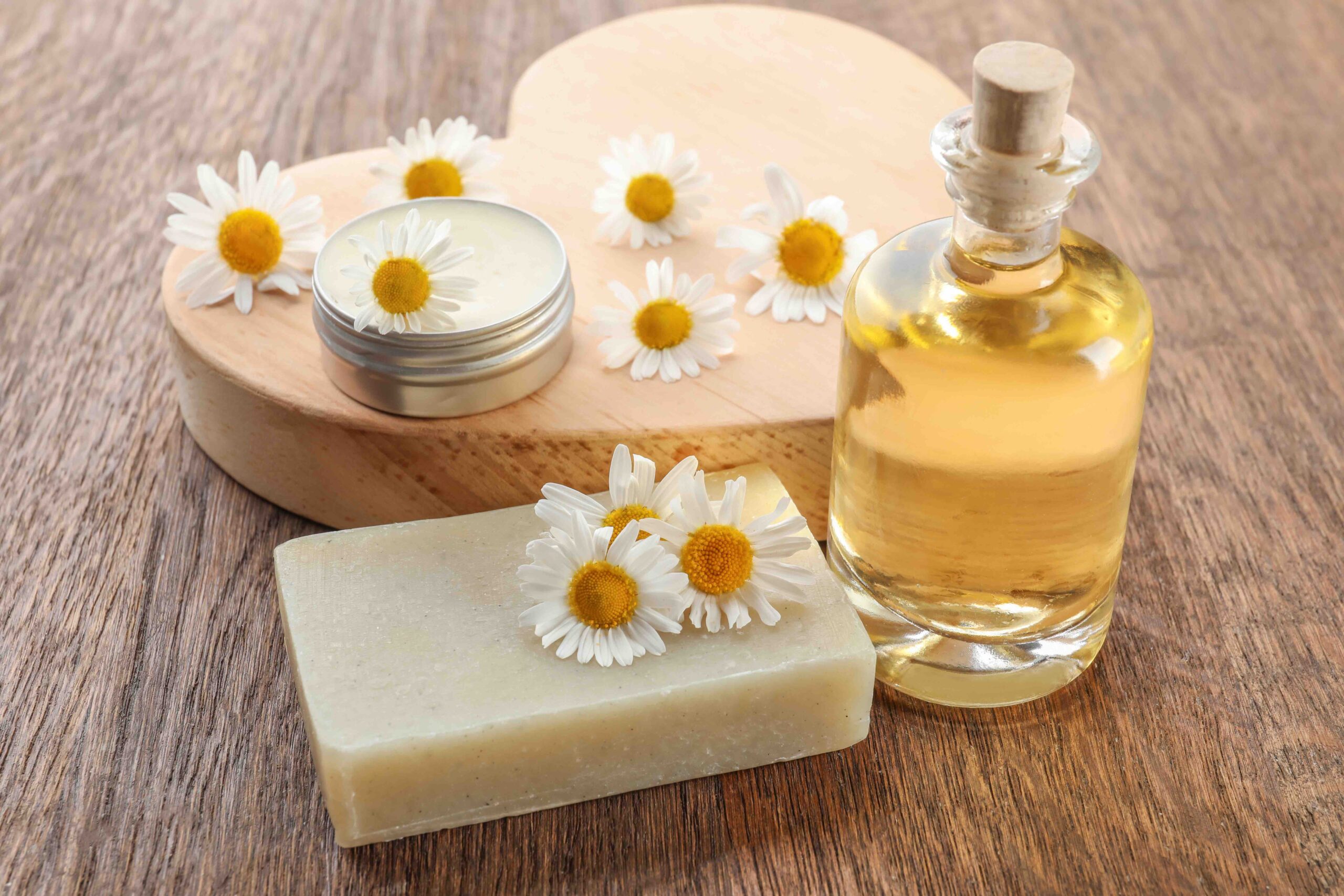
Canine aromatherapy should always be approached with your dog’s safety in mind.
What Is Canine Aromatherapy?
Canine aromatherapy refers to the use of aromatic plant compounds and essential oils around dogs as part of a broader approach to wellbeing.
Unlike conventional veterinary medicine, aromatherapy should not be presented as a replacement for diagnosis or treatment from a veterinarian. Instead, responsible canine aromatherapy focuses on careful, informed and conservative use.
Essential oils contain volatile compounds that produce their characteristic aromas. Their effects and risks can vary considerably depending on the particular oil and how it is used.
For dog owners interested in aromatherapy, education is therefore one of the most important first steps.
Can Essential Oils Benefit Dogs?
There is considerable interest in the potential role of aromatherapy in canine wellbeing, particularly around creating a calm and comfortable environment.
However, it is important to distinguish between potential supportive benefits and proven veterinary treatments.
Essential oils may help with anxiety, infections, pain or other medical conditions and may be explored as a complementary well-being practice, with appropriate professional guidance.
Why Essential Oil Safety Matters
One of the biggest misconceptions about essential oils is that a product is automatically safe because it comes from a plant.
In reality, essential oils are concentrated substances. Veterinary toxicology sources report that exposure can occur through ingestion, skin contact or inhalation, with the risk depending on factors including the oil, dose, concentration and route of exposure.
For this reason, never assume that an essential oil that is considered suitable for humans is automatically suitable for your dog.
Avoid Applying Concentrated Oils Directly to Your Dog
The MSD Veterinary Manual advises against directly applying essential oils to pets because of the variability in concentration, formulation and potential toxicity.
This is particularly important for owners who may be tempted to put undiluted oils onto a dog’s coat, paws, ears or skin.
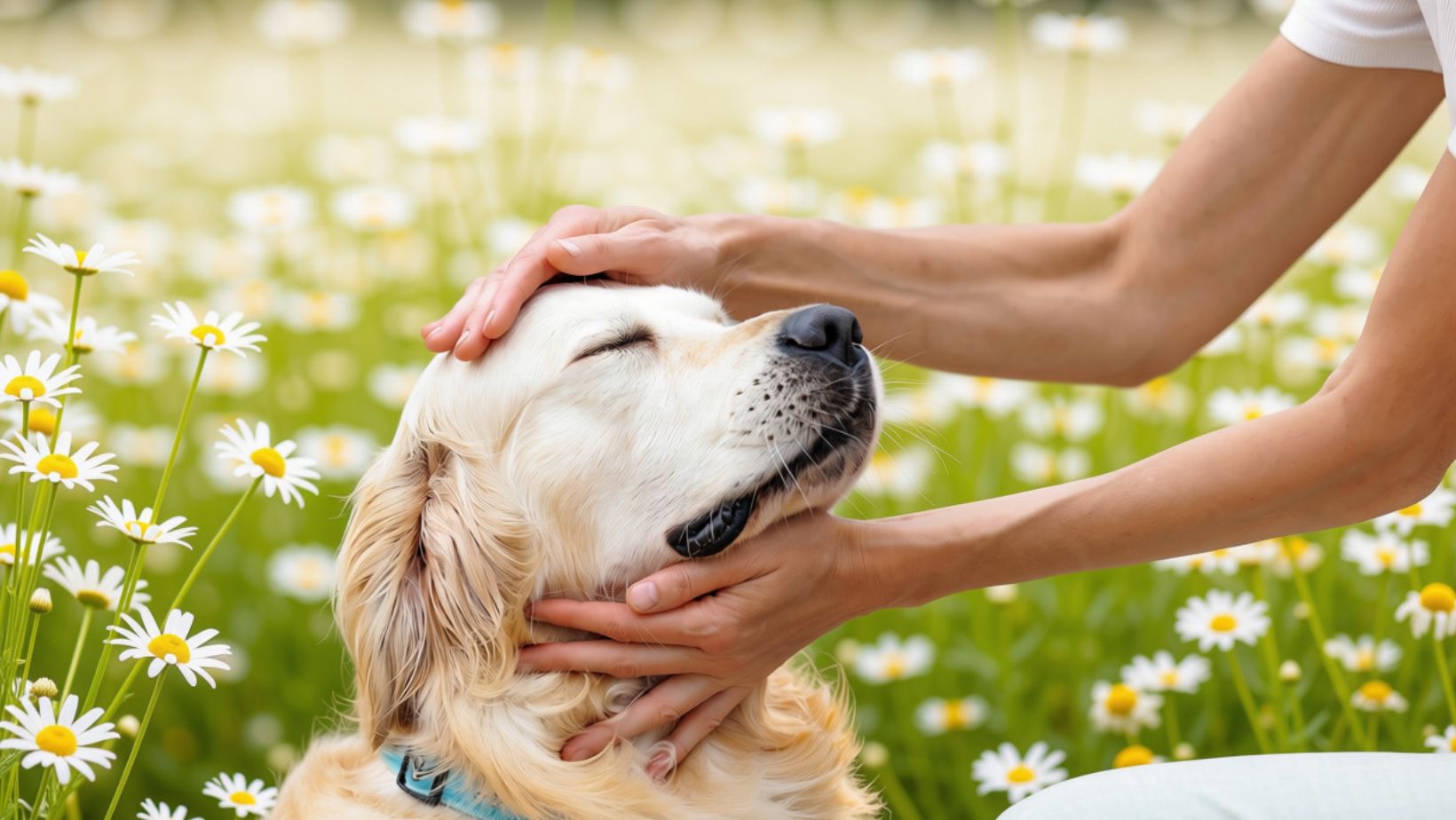
Dogs have an acute sense of smell so essential oils can be overwhelming.
Which Essential Oils Are Dangerous for Dogs?
There isn’t a simple universal list of oils that are “safe for every dog.” Toxicity can vary according to the oil, concentration and exposure.
Pet Poison Helpline identifies tea tree (melaleuca), pennyroyal, wintergreen and pine oils among essential oils associated with canine toxicities.
The Australian Poisons Health Line also list certain essential-oil-containing plants, including eucalyptus, as toxic to dogs.
This is why you need to do your homework especially online as information claiming that particular oils are universally “safe” can be misleading.
What About Essential Oil Diffusers?
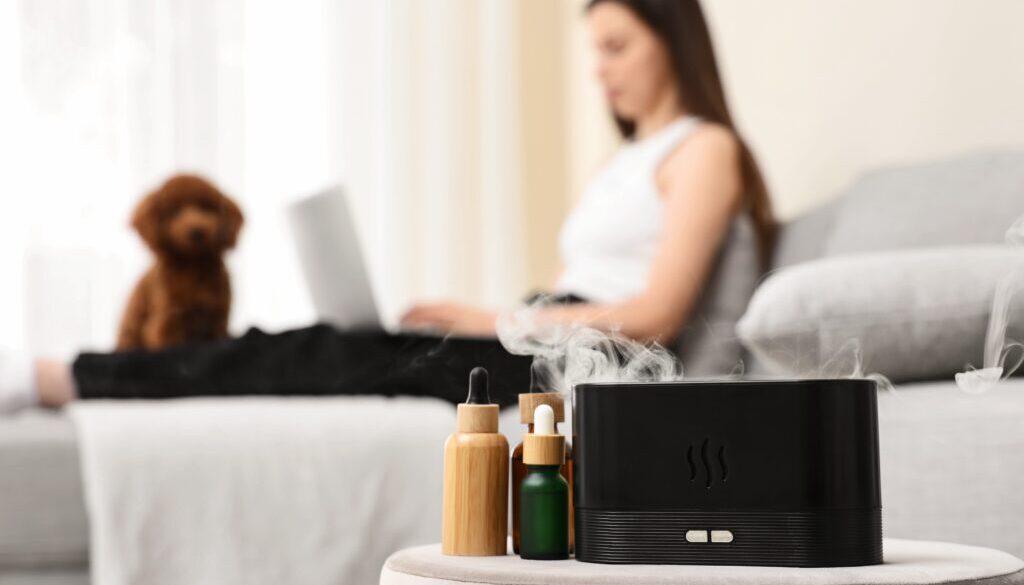
Diffusers require particular care.
According to the RSPCA a short period of diffuser use in a secured area that a pet cannot access is unlikely to cause a problem for many pets. However, pets with respiratory problems may be better off without a diffuser, and dogs can find strong aromas overwhelming because their sense of smell is much more sensitive than ours.
If you use a diffuser around your dog, consider:
- Keeping the diffuser physically inaccessible.
- Providing good ventilation.
- Ensuring your dog can leave the area.
- Avoiding prolonged exposure.
- Never forcing a dog to remain in a strongly scented room.
- Stopping use if your dog appears uncomfortable or develops respiratory signs.
A veterinarian should be consulted before using aromatherapy around a dog with an existing health condition.
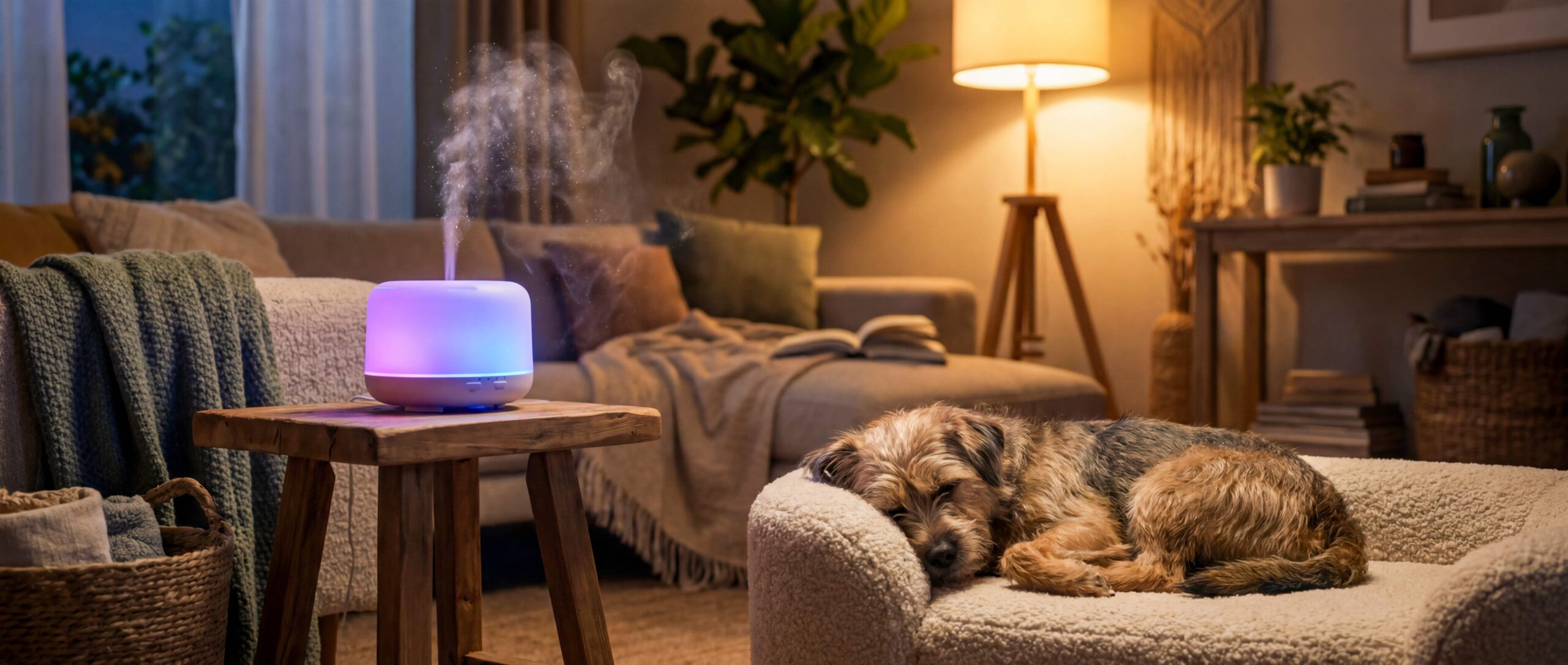
Only use diffusers in well-ventilated rooms.
Canine Aromatherapy Is About Safety First
The most responsible approach to canine aromatherapy is not about finding a miracle oil or trying something out because it promises a natural cure.
It’s about understanding essential oils, recognising their concentration and potential risks, using appropriate caution, and involving your veterinarian when necessary.
For dog owners, knowledge is the most important part of natural pet care.
If you are considering aromatherapy for your dog, take the time to learn about the specific oil and method before using it. Your dog’s individual health, age, size and circumstances all matter.
Learn More About Canine Aromatherapy

For dog owners who want to explore aromatherapy in greater depth, doing a dedicated canine aromatherapy course can provide a structured introduction to essential oils, potential applications and—most importantly—responsible safety practices.
If you are interested in holisitic therapies VetPet Academy are currently offering their Canine Aromatherapy Course free. Sign up to VetPet Academy’s Free Canine Aromatherapy Course.