
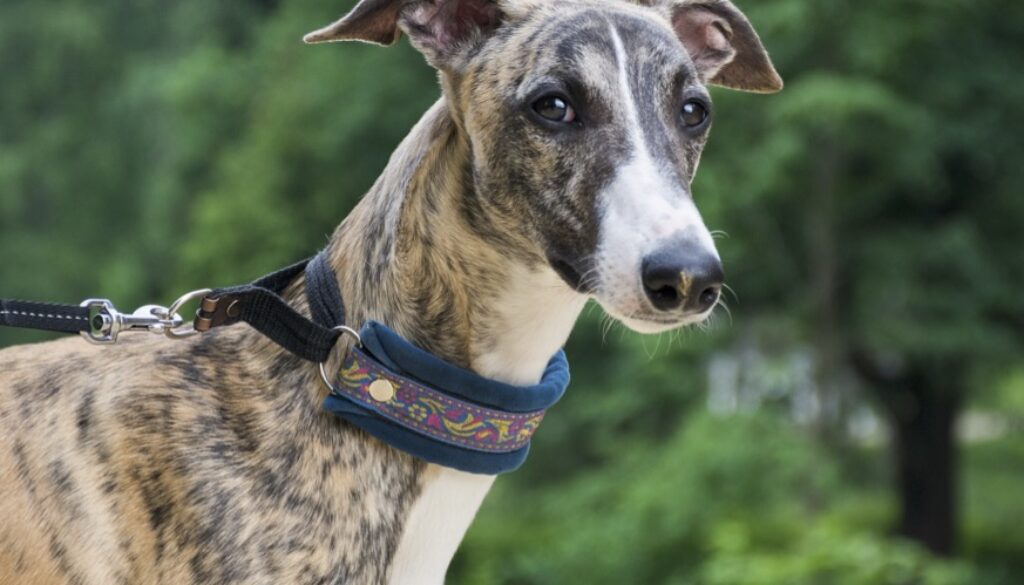
Greyhound Dogs as Pets: The Surprising Truth About Life With a Greyhound
They can run at astonishing speed—but at home, many Greyhounds would rather be wrapped in a blanket on the sofa.
That contrast is one of the biggest surprises for people considering a Greyhound as a pet.
Elegant, affectionate and often wonderfully calm indoors, Greyhounds can make exceptional companions. And for families considering a rescue Greyhound, adoption can also give a retired racing dog a safe, comfortable second chapter.
But Greyhounds aren’t the right dog for every household.
Their speed, prey drive, sensitive nature and sometimes limited experience of everyday home life mean that new owners need to understand what makes this breed different.
So, are Greyhounds good pets?
Absolutely—but the best Greyhound owners know what to expect before bringing one home.
Greyhound breed at a glance
The Greyhound is a sighthound: a breed developed to spot and chase moving prey using exceptional vision and speed.
They are tall, athletic dogs with a short, easy-care coat and a distinctive slender build. Despite their racing reputation, Greyhounds can be surprisingly relaxed at home. The American and Australian Kennel Clubs describe them as mild and sensitive dogs that can happily spend considerable time lounging with their families.
Quick Greyhound facts
- Breed: Greyhound
- Type: Sighthound
- Temperament: Often gentle, sensitive, affectionate and independent
- Exercise: Regular daily exercise plus opportunities for safe running and enrichment
- Grooming: Relatively low maintenance
- Training: Best with short, positive, reward-based sessions
- Prey drive: Can be strong, particularly around small animals
- Rescue potential: Many retired racing Greyhounds are available through adoption programs
- Best home: One that provides patience, secure outdoor areas, comfortable bedding and thoughtful training
For Australian owners, the RSPCA’s guide to owning a Greyhound is an excellent starting point.
Are Greyhounds good pets?
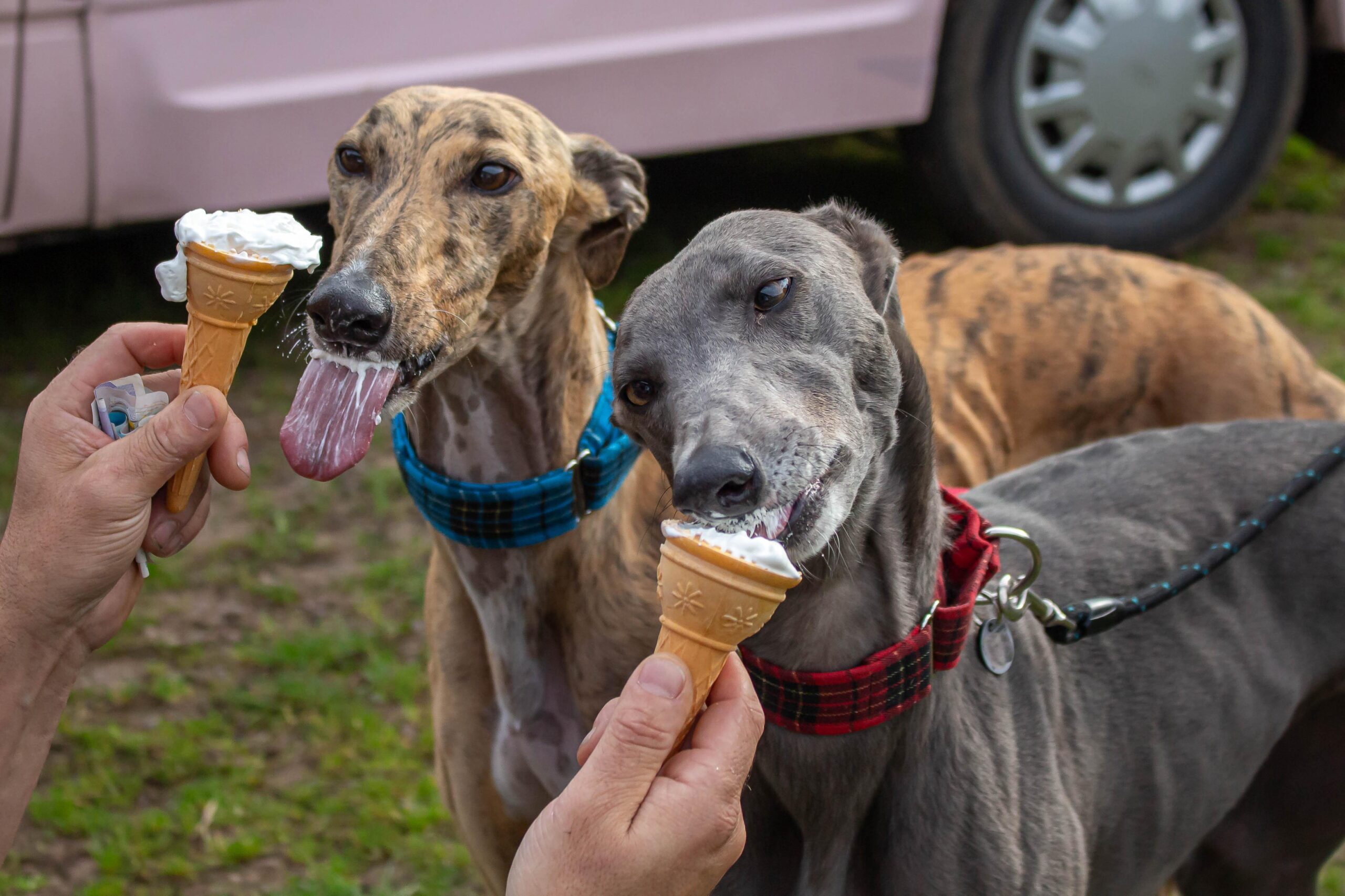
Greyhounds are happy contented dogs who easily adapt from racing to being a homebody.
As Greyhound racing is slowly being banned in many countries those dogs on the racing circuit will need loving homes to go to.
Unfortunately, most people don’t realise that Greyhounds can be fantastic pets.
One of their most appealing characteristics is the difference between their athletic ability and their typical home lifestyle.
A Greyhound can sprint incredibly quickly, yet many are content to spend much of the day resting.
Many people are surprised that Greyhounds generally don’t need enormous amounts of space to exercise and may be happy with around an hour of combined daily walking and play – although individual needs vary between dogs.
This makes the breed surprisingly adaptable.
However, “low exercise” shouldn’t be confused with “no exercise”.
Your Greyhound still needs regular movement, enrichment, social interaction and opportunities to behave like a dog.
Rescue Greyhounds: what should new owners expect?
Adopting a rescue Greyhound can be very different from buying a puppy.
You may be welcoming an adult dog that has already developed strong habits and preferences.
That’s not necessarily a disadvantage.
In fact, one of the benefits of adopting through an established organisation is that the dog’s temperament, behaviour and compatibility can often be assessed before adoption.
For example, Greyhounds As Pets programs assess dogs and work to match them with suitable homes. Their process can include veterinary checks, behavioural assessment and foster experience.
Some top greyhound rescue contacts include Greyhound Trust (UK), Friends of the Hounds (Australia), FLIGHTS (Canada), Greyhounds as Pets NZ (New Zealand), and Hounds Abound (America). These organizations coordinate adoptions, foster networks, and rehabilitation for retired and rescued racing hounds.
Give your new Greyhound a decompression period
One of the best things you can do is slow down.
Don’t try to introduce your Greyhound to everyone and everything during the first few days. Instead:
- Create a quiet, comfortable resting area.
- Keep the first few days predictable.
- Introduce new experiences gradually.
- Reward calm behaviour.
- Keep walks simple and low-pressure.
- Avoid overwhelming visitors.
- Supervise interactions with children and other animals.
- Let your Greyhound retreat when they need space.
Think of the first few weeks as an opportunity to build trust rather than a race to teach every command.
Greyhound training: what works best?
Greyhounds are intelligent, but they can also be independent. That means traditional “because I said so” training isn’t the answer. Instead, use short, positive training sessions.
Reward the behaviour you want. Make learning worthwhile and stop on a positive note while your dog is still engaged.
Useful early behaviours for a dog off the track include:
-
- Responding to their name
- Walking calmly on lead
- Coming when called
- Going to a designated bed
- Waiting at doors
- Leaving objects alone
- Calmly greeting people
- Settling in different environments
- Comfortable handling for grooming and veterinary care
The RSPCA specifically recommends reward-based training for Greyhounds and notes that a stationary “stand” can sometimes be more comfortable and practical to teach than a traditional sit.
For more practical dog-care education, explore the VetPet Academy resources and online courses, which cover canine care, behaviour, emergency first aid and other practical skills for dog owners.
How much exercise does a Greyhound need?

Mental enrichment is very important for Greyhounds
Here’s where the Greyhound’s reputation can be misleading.
They were bred for speed—not necessarily for endless endurance.
Many Greyhounds are perfectly happy with daily walks, play and enrichment followed by a serious nap.
The RSPCA suggests around an hour of combined daily exercise and play as a general guide, while emphasising that individual dogs vary.
A good routine might include:
Morning: relaxed walk and sniffing opportunities.
Midday: toilet break, enrichment toy or short training session.
Afternoon: rest.
Evening: another walk, gentle play and a few minutes of training.
The goal isn’t to exhaust your dog.
It’s to meet their physical and mental needs.
Don’t forget mental enrichment
Physical exercise is only part of a Greyhound’s wellbeing.
Try:
-
- Food puzzles
- Snuffle activities
- Scatter feeding
- Scent games
- Trick training
- Short obedience sessions
- Safe chew toys
- Interactive toys
- Calm social experiences
Rotate enrichment activities so they remain interesting.
And remember that treats used during training count towards your dog’s overall daily food intake.
Greyhound health and veterinary care
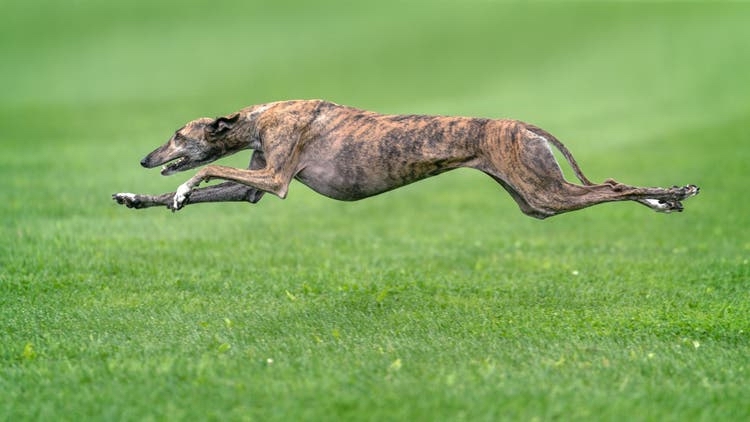
Past racing injuries may lead to ongoing or age related medical issues.
Like every breed, Greyhounds have health considerations worth discussing with your veterinarian.
Their athletic build and fine skin can make certain injuries more noticeable, while dental health deserves particular attention.
The American Kennel Club’s current Greyhound health recommendations include cardiac and ophthalmologist evaluations and DNA testing for Greyhound polyneuropathy when relevant to breeding health programs.
For an individual pet, your veterinarian can help establish an appropriate preventive-care plan based on age, lifestyle and medical history.
Also ask your vet about:
-
- Dental care
- Parasite prevention
- Weight and body condition
- Exercise after injury
- Skin and foot problems
- Nutrition
- Vaccinations
- Behaviour changes
- Senior-dog screening
If your Greyhound suddenly develops fear, aggression, lameness, appetite changes or unusual behaviour, don’t simply assume it’s a “Greyhound thing”.
A veterinary assessment can help rule out an underlying medical problem.
The Greyhound “sleep startle” issue
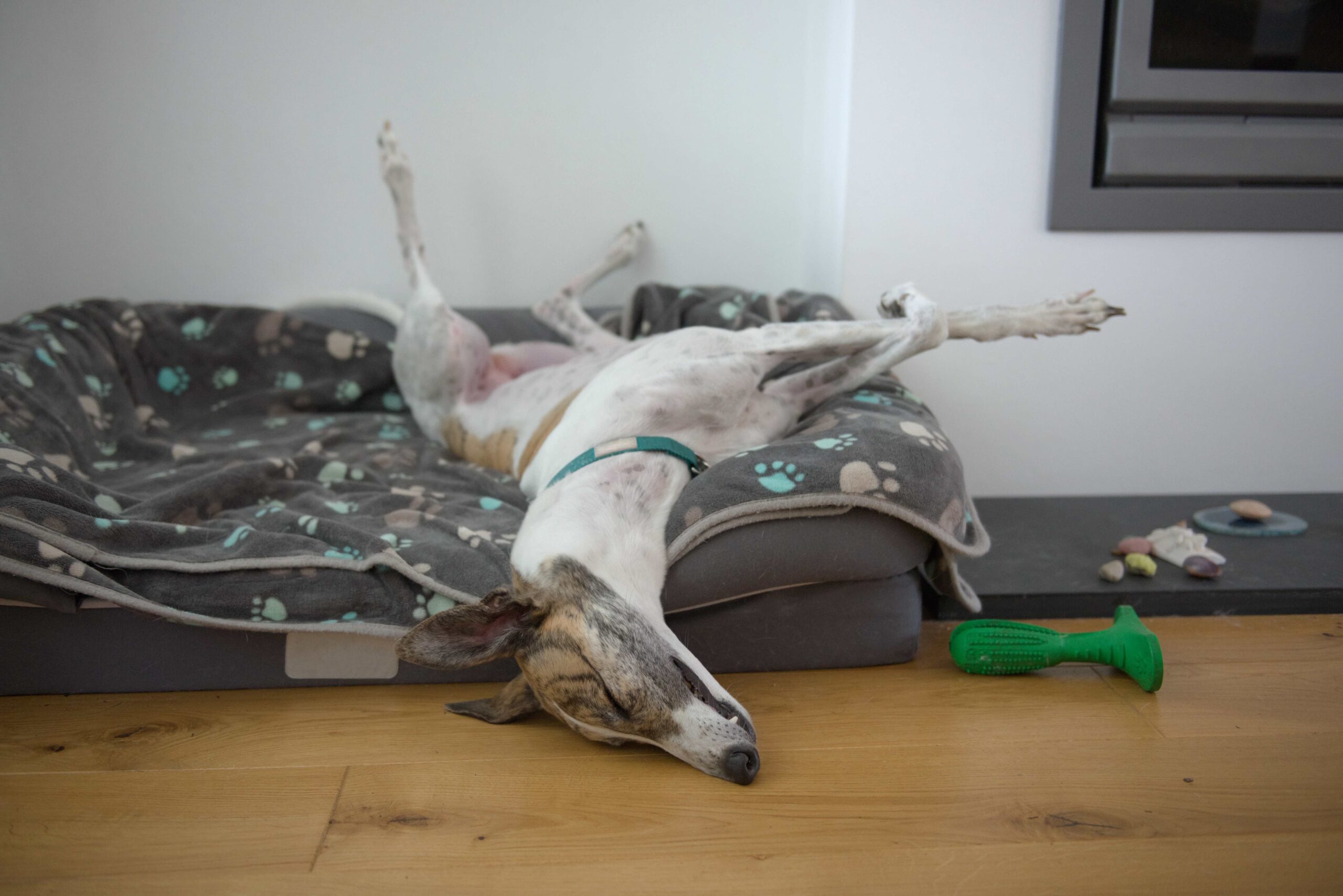
Give your Greyhound a ‘sleep zone’.
This deserves special attention for new owners.
Some Greyhounds can startle when suddenly woken.
Their sleeping area should therefore be treated as a do-not-disturb zone.
Instead of touching or startling a sleeping dog, calmly call their name from a distance if you need their attention.
If your Greyhound displays sleep aggression or other concerning behaviour, seek professional veterinary behavioural advice rather than attempting to punish the behaviour.
This is one of those small pieces of knowledge that can make a huge difference to household safety.
Are Greyhounds good with children and other animals?
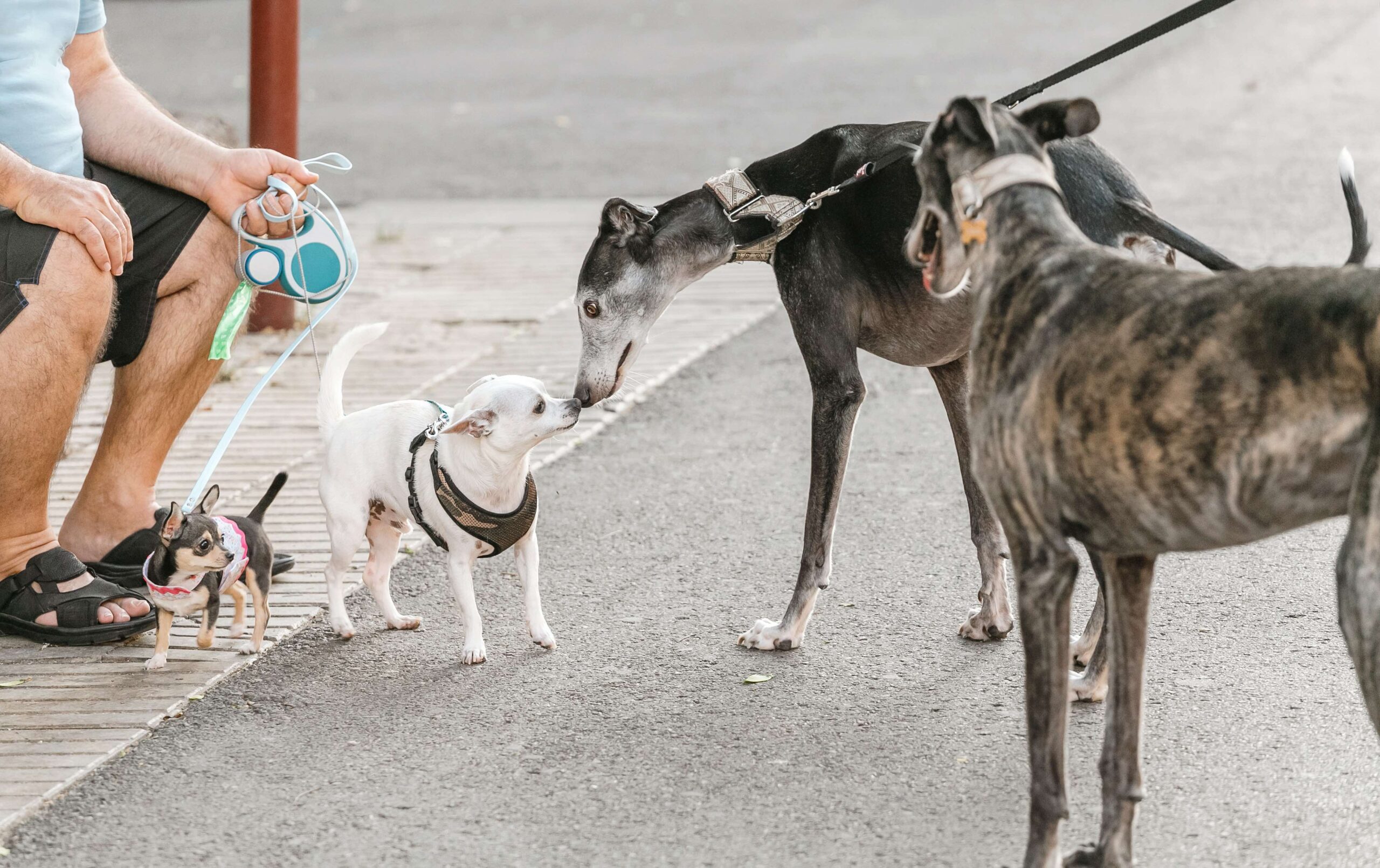
It’s important to introduce and assess your Greyhound with other pets and children.
They can be, but supervision is essential.
A Greyhound may be gentle while still being startled by sudden movement, noise or unexpected touching.
Children should be taught to respect the dog’s space, particularly when the Greyhound is eating or sleeping.
Every dog should have a quiet retreat where children understand they must not disturb them.
If possible take your existing dog(s) to the adoption centre for a supervised introduction with your new Greyhound or do an initial meet at a park or some other ‘safe’ area. Meeting on neutral ground avoids any territorial behaviour associated with the family home.
If you have a cat, check that the Greyhound has been through a preliminary assessment by the rescue centre. These assessments check if the Greyhound is suitable for homes with small children, cats and dogs.
To ensure safety the RSPCA guidance recommends supervising interactions between Greyhounds and children or other animals when introducing them to a new home.
Greyhound pros and cons: the quick verdict
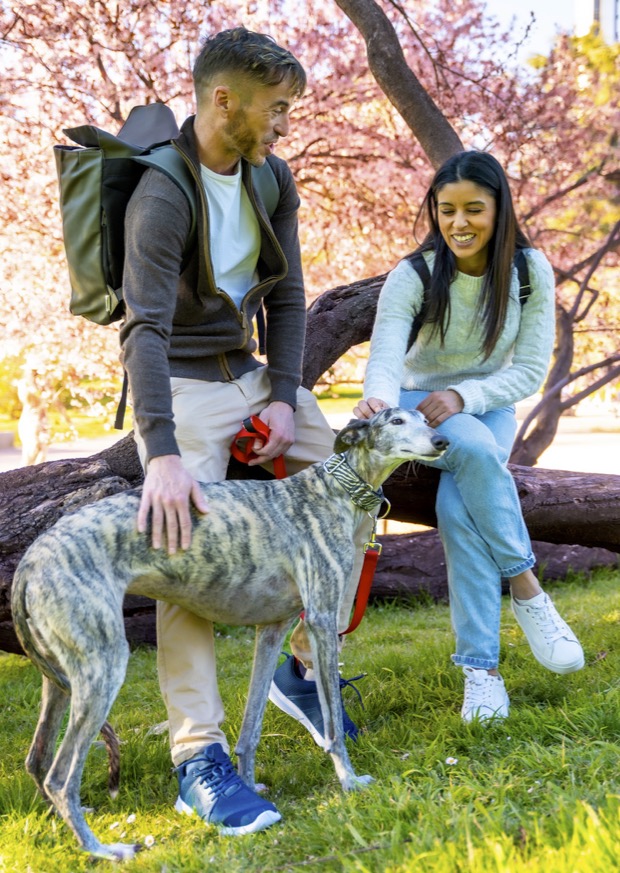
Most Greyhounds are rescues so need specific care and attention.
The pros
✔ Calm indoors – Many Greyhounds love relaxing at home.
✔ Affectionate – They can form wonderful bonds with their families.
✔ Low grooming demands – Their short coat is relatively easy to maintain.
✔ Surprisingly adaptable – They can live comfortably in a range of homes when their needs are met.
✔ Rescue opportunities – Retired Greyhounds can make wonderful companions.
✔ Rewarding to train – Positive training can build confidence and strengthen your relationship.
The cons
✘ Strong chase instinct – Small animals may present a safety challenge.
✘ Secure fencing is essential – Their speed makes escapes particularly dangerous.
✘ Some need considerable adjustment time – Rescue Greyhounds may be unfamiliar with ordinary home life.
✘ Sensitive temperament – Harsh training methods are inappropriate.
✘ Individual differences matter – One Greyhound’s personality cannot predict another’s.
✘ Special care is needed around weather and injury – Their lean build provides less protection from environmental extremes and physical knocks.
Is a Greyhound right for you?
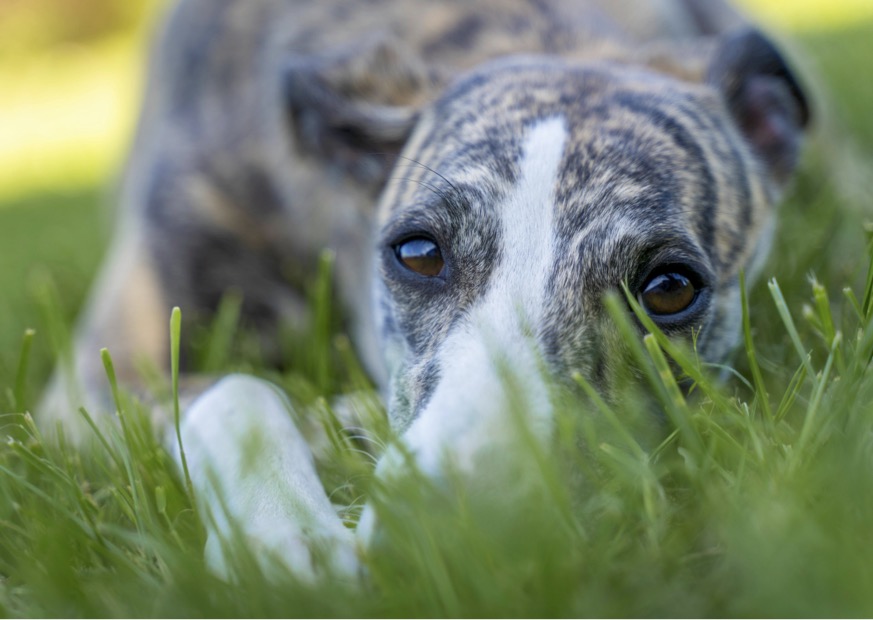
Greyhounds make gentle, loving companions.
Ask yourself these questions before adopting:
-
- Can I provide secure fencing?
- Am I prepared to manage a dog with potential prey drive?
- Can I give a rescue Greyhound time to settle?
- Will I use reward-based training?
- Can I provide a comfortable indoor resting space?
- Am I prepared to supervise interactions with children and other pets?
- Can I commit to ongoing veterinary care and preventive health care?
If the answer is yes, a Greyhound could be an extraordinary addition to your family.
And if you’re considering a rescue Greyhound, don’t be discouraged if the first few weeks aren’t perfect.
For some dogs, the journey from kennel life to family life takes time.
Patience is part of the adoption.
Ready to give your Greyhound the best start?
A Greyhound doesn’t need a perfect owner.
They need an informed one.
Whether you’re bringing home a retired racing Greyhound, adopting a rescue, or simply want to understand the breed better, learning how dogs communicate and how reward-based training works can make everyday life easier for both of you.
Start building your dog-care knowledge with VetPet Academy.
Explore VetPet Academy’s expert-led canine care courses and resources and develop practical skills you can use throughout your dog’s life.
Your Greyhound may spend much of the day sleeping—but the quality of the life you give them matters every minute they’re awake.