Dog Life Jackets : Keeping Your Dog Water Safe
What About Dog Life Jackets?
Now for one of the most important pieces of canine safety equipment for water-loving dogs:
the dog life jacket.
Even a confident swimmer can become tired, encounter currents or struggle in unfamiliar water.
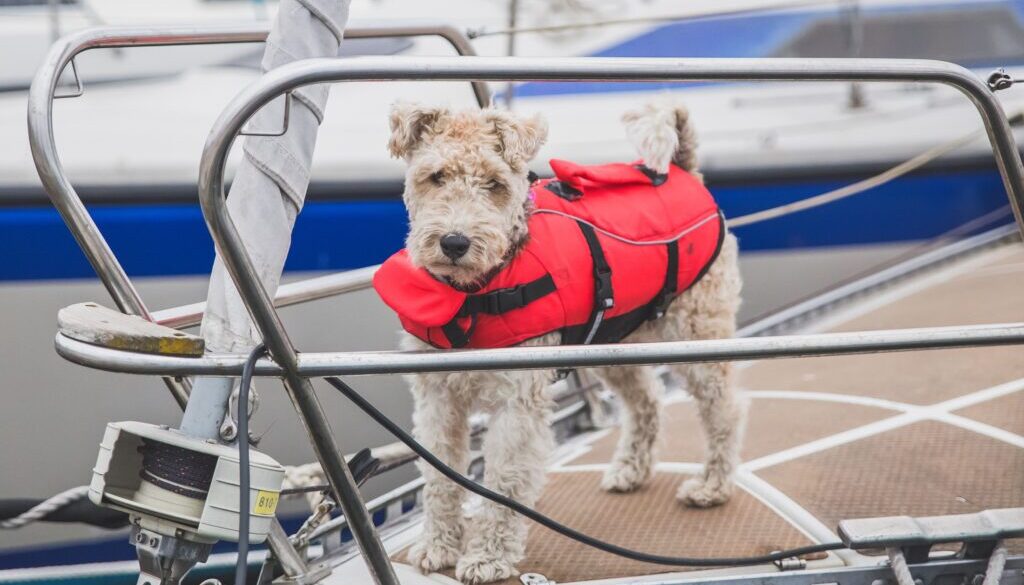
A properly fitted dog life jacket can provide additional buoyancy and visibility, giving you another layer of safety during swimming, boating and other water activities.
Important: Dog life jackets should never replace supervision, appropriate environmental management or veterinary advice. If your dog shows signs of being excessively cold (hypothermia), distress, overheating (hyperthermia), fatigue or difficulty breathing, remove the gear and seek appropriate help.
If you want to know more VetPet Academy’s Canine Emergency First Aid Course provides training for temperature extremes – hypothermia or hyperthermia – in dogs.
Why Should Dogs Wear Life Jackets?
According to Boaterexam whether you are cruising, fishing, or relaxing, boating with a dog it’s important to remember to protect them on the boat, including having the correct safety equipment for them.
A life jacket can be particularly valuable for:
- Boating
- Kayaking and paddleboarding
- Open-water swimming
- Strong currents
- Unfamiliar water
- Puppies learning to swim
- Older dogs with reduced stamina
- Dogs that fatigue quickly
- Dogs with body shapes that make swimming more difficult
- Dogs undergoing hydro/water therapy
Even strong swimmers aren’t immune to exhaustion or changing water conditions.
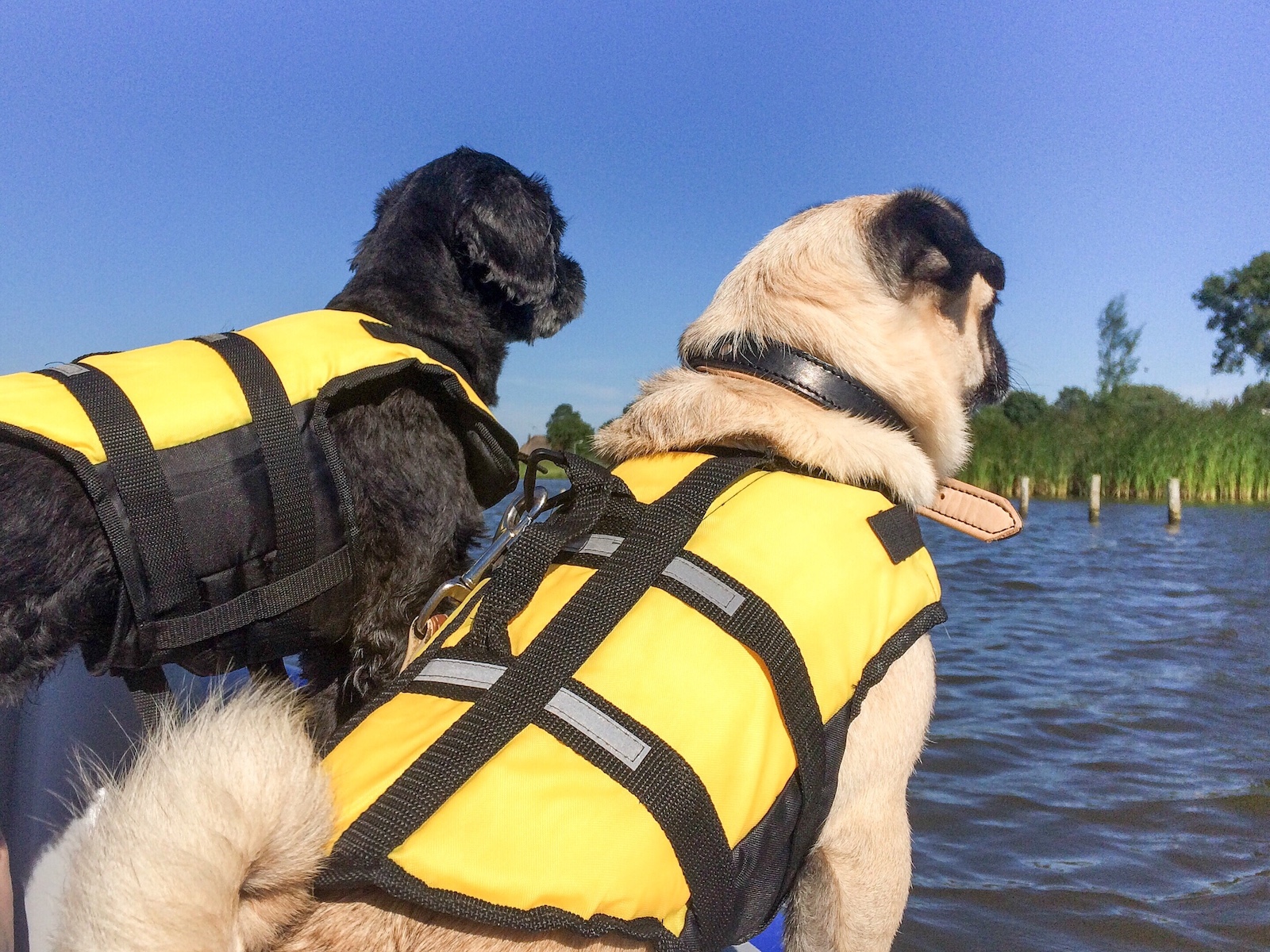
Dogs on boats or canoes – whether it’s on the river or open ocean -should wear life jackets.
Look for these life-jacket features
Choose the best life jacket available for your dog. The majority of cheaper options available only wrap foam around the top of your dog. Quality proven life jackets according to Surf Dog Australia should support the chest and shoulders, keep your dog’s head and front end higher in the water, and allows you to lift them safely back onto your board, canoe or boat.
A good dog life jacket may include:
- Adjustable straps
- Secure flotation panels
- Bright, highly visible colours
- Reflective details
- A sturdy rescue handle
- Appropriate leash/D-ring attachment
- Durable, water-resistant materials
A sturdy, strong rescue handle can be particularly useful if you need to help lift your dog from the water.
Water rescue dogs wear life jackets during training and in work. They provide extra buoyancy against sudden fatigue, offer a secure grab handle for people being rescued, allow handlers to lift or steer them, and ensures high visibility in choppy, unpredictable open water.
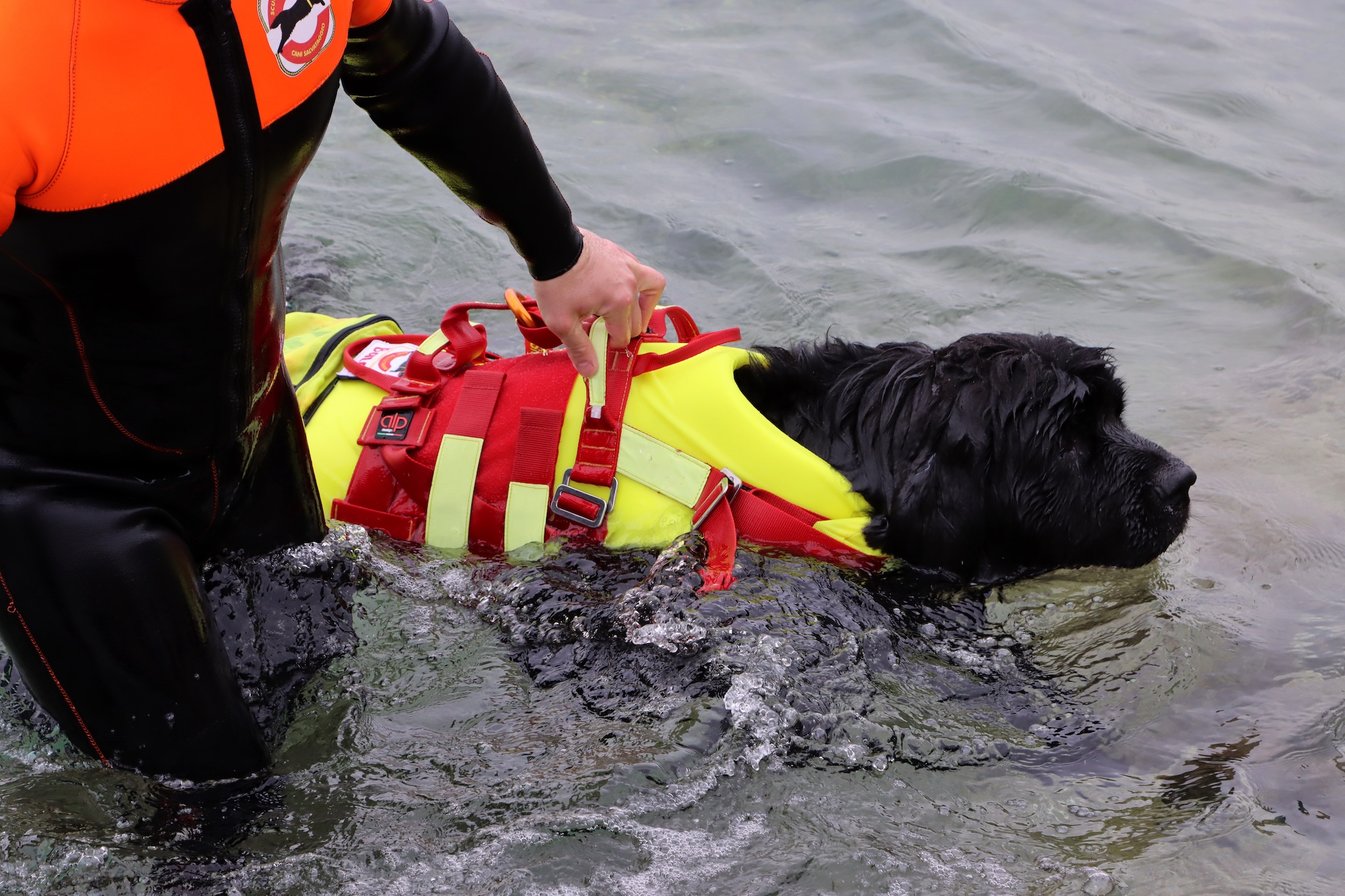
Rescue dog life jackets helps prevent exhaustion during long, strenuous swims or heavy towing.
A Life Jacket Is Not a Substitute for Supervision
This is worth repeating.
A life jacket does not make a dog drown-proof.
Check the jacket before every outing for:
- Tears
- Damaged straps
- Broken buckles
- Loose stitching
- Deteriorated flotation material
- Excessive wear
A damaged or poorly fitted life jacket can create additional risks.
And always consider the water itself. Currents, waves, temperature, access points and water quality can all affect safety.
Coat or Life Jacket? Don’t Confuse the Two
A winter coat is designed primarily for weather protection and warmth.
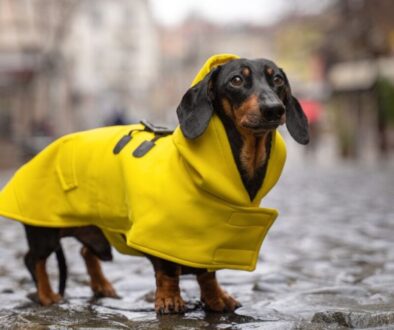
A raincoat is designed primarily for rain and wet-weather protection.
A life jacket is designed to provide buoyancy and visibility in water.
They are not interchangeable.
If your dog is going boating, swimming or participating in water sports, choose equipment specifically designed for flotation.
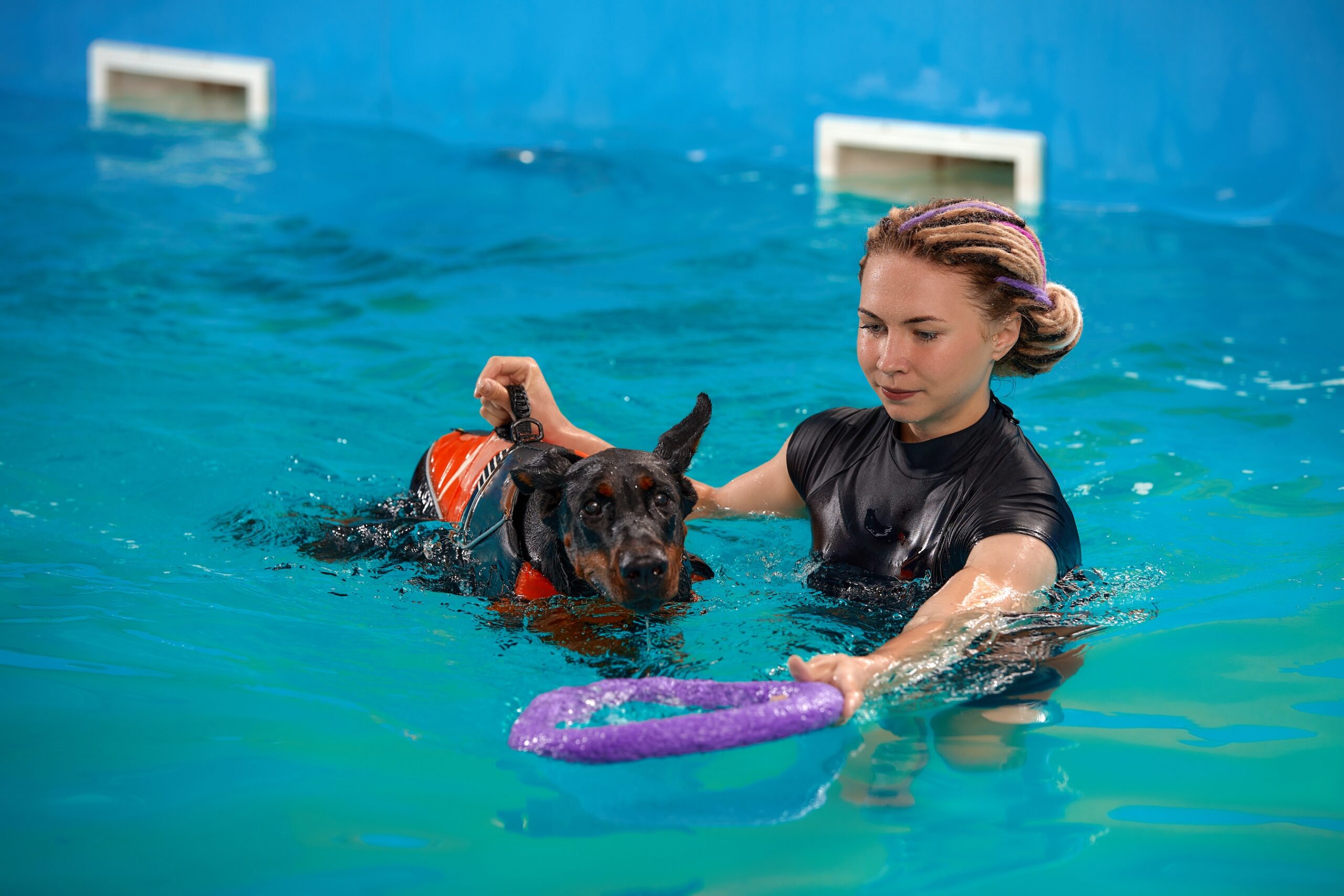
Canine water therapy may also include a life jacket. Providing patient buoyancy and therapist support.
How to Teach Your Dog to Accept a Life Jacket
The best time to introduce new equipment is before you actually need it.
Try this simple progression:
1. Investigate
Place the life jacket on the floor.
Allow your dog to sniff it.
Reward calm interest.
2. Touch
Briefly touch the equipment to your dog’s body.
Reward relaxed behaviour.
3. Wear
Put it on for a very short period.
Reward your dog.
Remove it.
4. Increase duration
Gradually extend the wearing time while your dog remains relaxed.
5. Add movement
Walk around the house or yard.
Reward calm movement.
6. Introduce distractions
Once your dog is comfortable, practice wearing the equipment during normal activities.
A great way to trial a life jacket is putting it on for a short swim in your backyard pool (if you have one).
This gradual approach is consistent with positive-reinforcement recommendations for introducing dog life jackets.
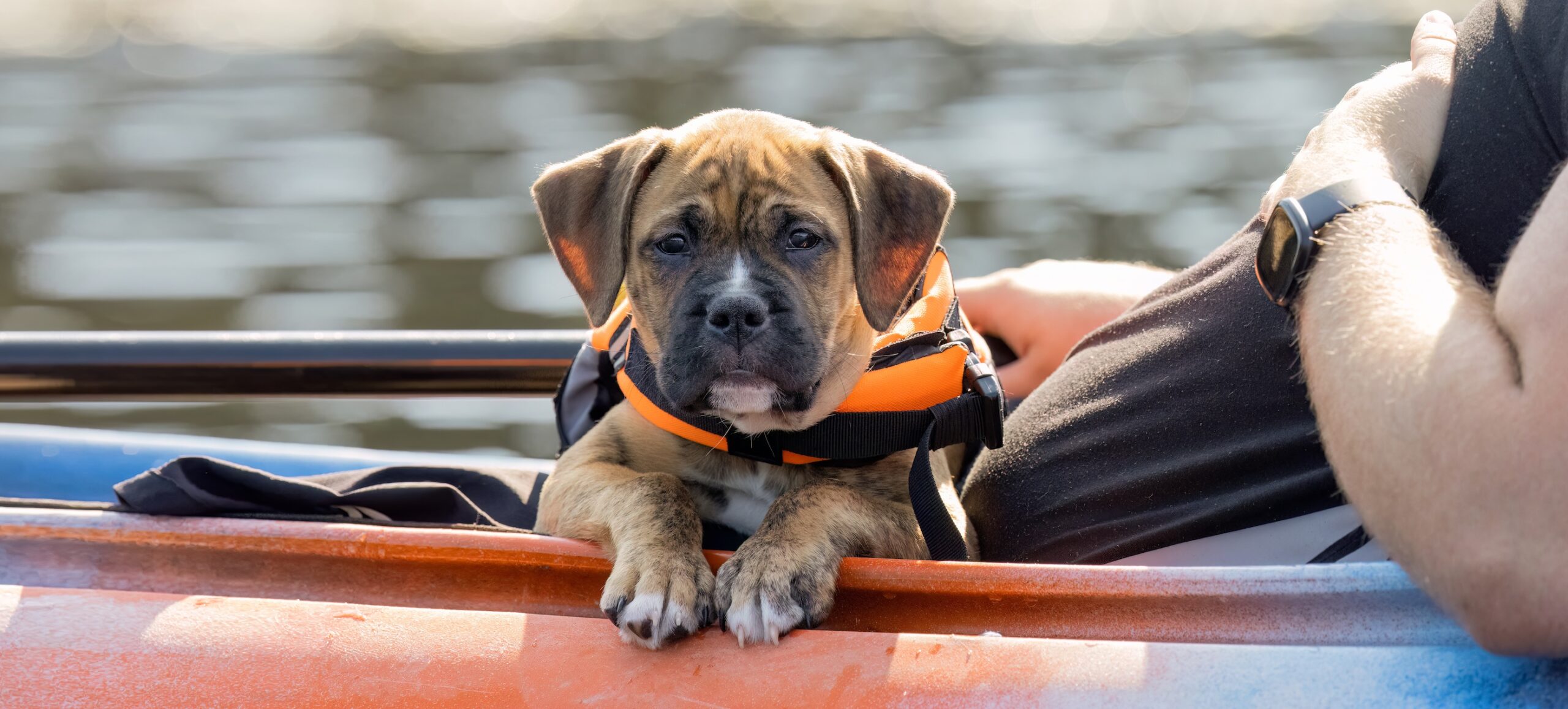
Start your dog slowly so he can build trust and acceptance of a life jacket.
Treating a life jacket as optional safety equipment on challenging water
Even capable swimmers can tire or encounter conditions they cannot manage.
For boating and open-water activities, a properly fitted life jacket is a sensible additional safety layer.
Your Dog’s Life Jacket Fitting Checklist
Before heading to the water, ask:
-
Does the life jacket fit securely?
-
Can my dog breathe normally?
-
Can they walk and move freely?
-
Can they sit, lie down and toilet comfortably?
-
Are there any rubbing points?
-
Is the equipment appropriate for today’s weather or activity?
-
Is my dog comfortable wearing it?
-
Is the equipment clean and in good condition?
-
Have I checked the life jacket for damage?
-
Am I able to supervise my dog?
If you can’t confidently answer these questions, stop and reassess before continuing.
For more information on fitting dog jackets check our blog post on ‘How to Get the Fit Right’.
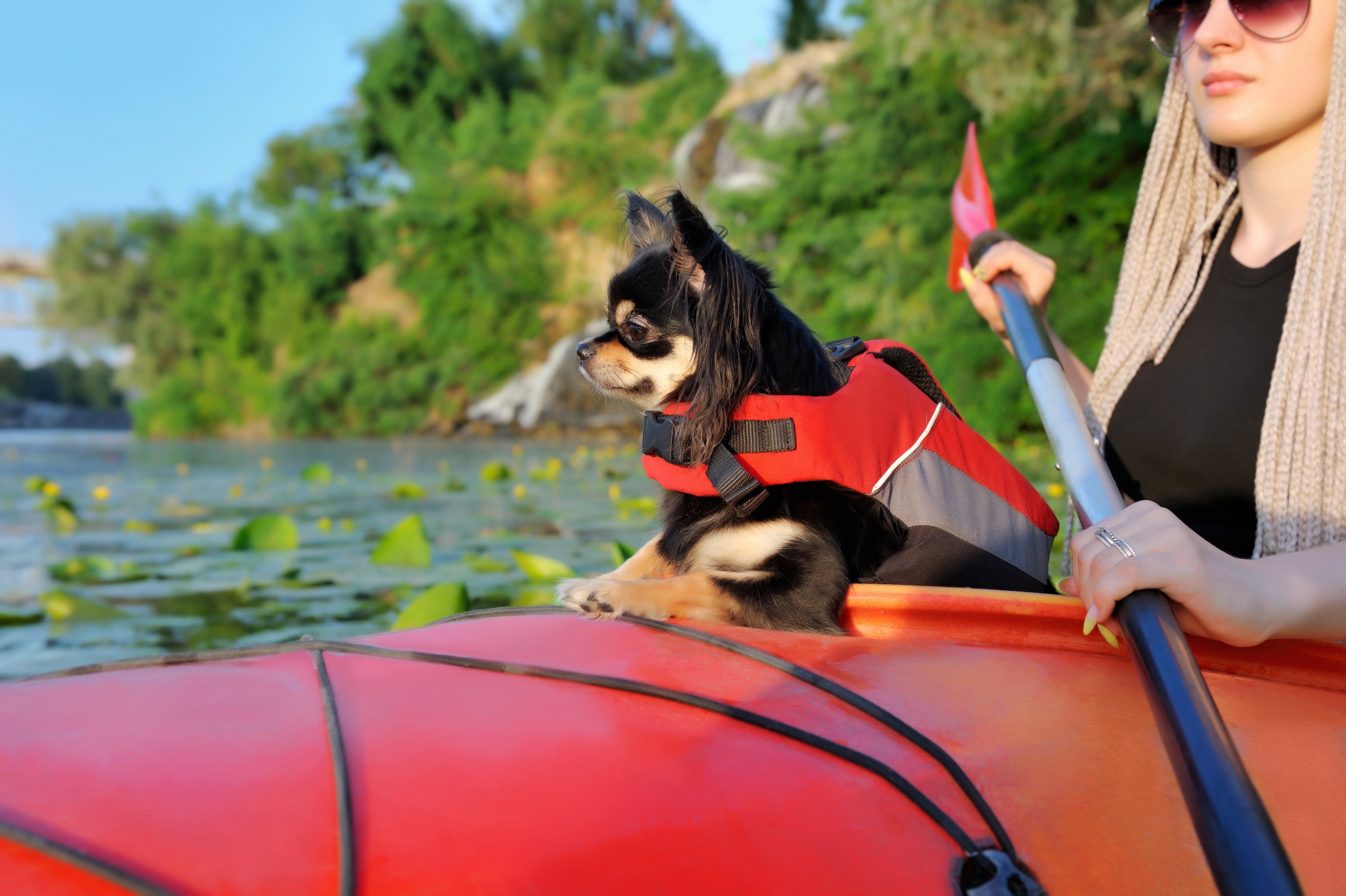
Dog life jackets come in all sizes. Make sure the one you choose fits correctly.
Make Sure Your Dogs Life Jacket is SAFE!
When it comes to water, the AKC advises not to rely on your dog’s swimming ability alone – no matter what the breed.
A properly fitted life jacket can provide valuable buoyancy and visibility, while sensible supervision remains essential.
Want to Build Your Dog-Care Skills With More Confidence?
Knowing how to fit equipment is just one part of responsible dog care.
At VetPet Academy, you can explore practical, expert-led education covering canine care, behaviour, emergency pet first aid and other skills designed to help owners and pet professionals make better-informed decisions.
Explore VetPet Academy courses and resources such as:
- Dog First Aid: What Every Dog Owner Should Know
- Understanding Canine Body Language
- Canine Behaviour and Stress Signals
- Pet Emergency Preparedness
- Canine Massage and Wellness
- Dog Exercise and Injury Prevention
- Dog Life Jackets: Do dogs need life jackets?
Ready to become more confident in caring for your dog? Explore VetPet Academy and start building practical canine-care knowledge today.